Complete Guide 2026
Buying Property in France
as a Foreigner: The Complete 2026 Guide
By Sarah & Sabine, Co-founders, Maison Arboris
France is one of the most transparent, legally robust real estate markets in the world. It is also one of the most opaque for anyone who did not grow up inside it.
The process is notarised, regulated, and relatively well protected, but it is built on layers of French administrative logic that can feel impenetrable from the outside. Terminology you have never encountered. Timelines that do not match what you know. Tax structures that interact with your home country in ways nobody warned you about.
This guide exists to change that.
We have written it for international buyers, whether you are based in London, Dubai, New York, or Riyadh, who want a clear, honest, and complete picture of what buying property in France actually involves. Not a brochure. Not a sales pitch. A map.
9 Steps
In the buying process
7–8%
Notaire fees (resale)
2.5–4 mo.
Typical completion time
No Restriction
For foreign buyers
Legal Framework
Can Foreigners Buy Property in France?
The short answer is yes, and without restriction.
France imposes no nationality-based barriers on property ownership. Whether you hold an EU passport or a non-EU one, whether you are a resident or a non-resident, you have the legal right to purchase real estate on French territory. There is no minimum investment threshold, no mandatory local partner, and no government approval process for standard acquisitions.
This places France in a category of genuine openness that not every country matches.
EU Citizens vs. Non-EU Citizens, What Changes in Practice?
Legally, very little. Both groups can buy, own, rent out, and sell French property on identical terms.
Where differences emerge is in the practical layer: access to French mortgages, tax residency status, rental income reporting obligations, and, for UK nationals post-Brexit, the rules governing how long you can physically stay in the country after purchase.
Do You Need French Residency to Buy?
No. Non-residents purchase French property every day. You will, however, need a French tax identification number (numéro fiscal) to complete the transaction and to declare any French-source income or capital gains. Your notaire, the public official who oversees the transaction, will typically help you obtain one.
Does Buying Property in France Give You Residency?
This is one of the most common misconceptions we encounter. The answer is no.
Purchasing real estate in France does not grant any visa, residence permit, or right to stay beyond the standard visitor allowances. France does not operate a golden visa scheme tied to property investment, unlike Portugal, Greece, or the UAE.
If you want to live in France, not just visit, you will need to apply for the appropriate visa separately. We address this in the sections on UK and US buyers below.
Key takeaway: France has no golden visa. Property ownership and residency rights are entirely separate processes.

Investment Rationale
Why Buy Property in France? What the Data Actually Supports
We are not in the business of selling France as a dream. We are in the business of helping you assess it as an asset.
That said, the fundamentals are genuinely strong.
Notarised System
Every sale recorded, every title verified, every encumbrance disclosed
3–6% Gross Yields
Capital preservation, liquidity, and consistent long-term value
Quality of Life
Healthcare, schools, infrastructure, and global connectivity
A Stable, Notarised, and Transparent Market
French real estate transactions are conducted under notarial law. Every sale is recorded, every title is verified, every encumbrance is disclosed. The risk of fraud or disputed ownership, significant concerns in some markets, is structurally very low in France.
Price data is publicly available through the <em>Demandes de Valeurs Foncières</em> (DVF) database, which records every transaction. This level of transparency is rare globally and gives serious buyers a real analytical edge.
Rental Yield and Investment Potential
Gross rental yields in France typically range from <strong>3% to 6%</strong>, depending on location, property type, and management model. Paris inner arrondissements run at the lower end; resort areas, student towns, and secondary cities can reach 5–6%.
The key variable is not yield alone, it is the combination of yield, capital preservation, and liquidity. French property in established markets holds value with unusual consistency. It does not spike dramatically, but it does not collapse either.
Quality of Life, Infrastructure, and Strategic Location
For international families, France offers something that pure financial metrics do not capture: a stable, high-quality environment within easy reach of the rest of Europe, with excellent healthcare, strong educational infrastructure (including bilingual and international schools in major cities), and direct flight connections to virtually every major hub in the world.
For many of our clients, this is not a secondary consideration. It is the primary one.
Regions
Where to Buy, Regions and What They Actually Offer
France has distinct micro-markets. Treating them as interchangeable is a mistake we see regularly.
Paris
Capital Asset
€13k–€25k+/m²
Côte d'Azur
Luxury & Rental
€8k–€50k+/m²
Provence
Countryside Demand
From €400k
Bordeaux
Urban Investment
€3.5k–€6.5k/m²
French Alps
Resort Resilience
€3M–€30M+
Brittany & Normandy
Accessible Entry
€1.5k–€4k/m²
Paris, Capital Asset, Enduring Liquidity
Paris is the most liquid real estate market in France, and one of the most liquid in Europe. Average prices in prime arrondissements (6th, 7th, 8th, 16th) range from <strong>€13,000 to €25,000+ per square metre</strong> as of 2025–2026.
It is not a yield market. It is a <strong>capital preservation and lifestyle market</strong>. Buyers here are not primarily optimising for rental income, they are securing a stable, internationally recognised asset with strong resale prospects and genuine personal utility.
Côte d'Azur and French Riviera, Luxury and Short-Term Rental Income
Nice, Cannes, Antibes, Saint-Tropez, and the surrounding coastline attract the largest share of high-net-worth international buyers in France. Prices in prime areas start at €8,000/m² and reach €30,000–€50,000/m² for exceptional seafront properties.
The rental market here is deep, particularly for seasonal short-term lets. A well-positioned villa in the Cannes or Cap d'Antibes area can generate meaningful income during the summer season. The trade-off: high entry prices, concentrated seasonality, and a complex short-term rental regulatory environment that has tightened in recent years.
Provence and the Luberon, Countryside with Enduring Demand
The Luberon and Alpilles remain among the most sought-after rural markets in France for international buyers, particularly from the UK, Benelux, and the Gulf. Farmhouses (<em>mas</em>), village houses, and restored bastides start from €400,000 in secondary villages and rise significantly for restored prestige properties.
This is a market where off-market access matters enormously. The best properties rarely reach the major portals.
Bordeaux, Urban Investment with Long-Term Conviction
Bordeaux underwent one of France's most dramatic urban transformations following the TGV connection to Paris (now 2 hours). Prices rose sharply, then stabilised. The market today offers a more balanced risk-return profile than Paris with a genuinely international wine and cultural identity that sustains demand.
The French Alps, Year-Round Resort Resilience
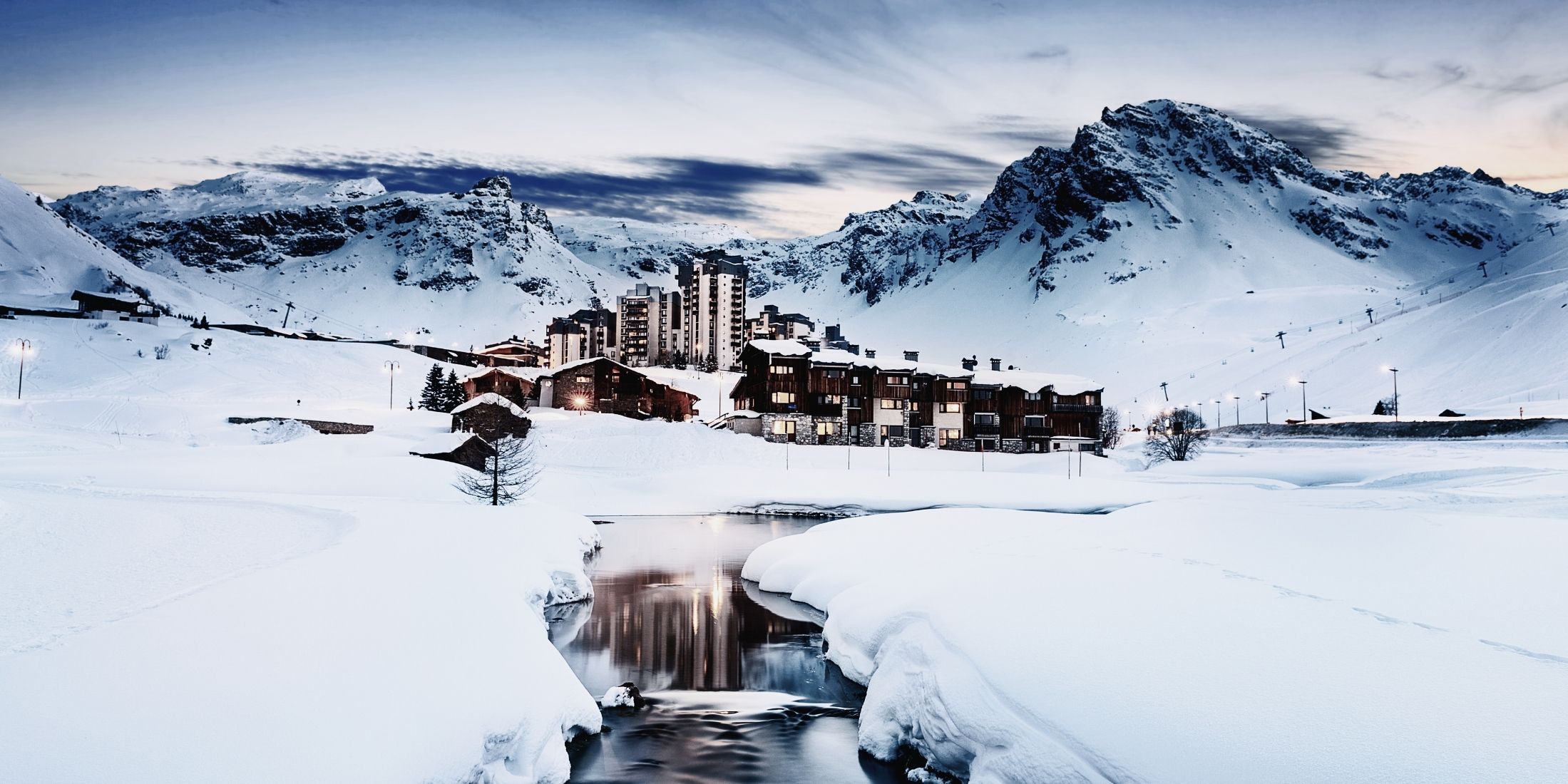
Megève, Courchevel, Val d'Isère, Chamonix. The French alpine market has proven exceptionally resilient, partly because summer tourism has grown substantially, reducing the pure ski-season dependency that concerned buyers a decade ago.
Chalet prices in top-tier resorts range from €3M to €30M+. The mid-market in lesser-known resorts offers better yield dynamics for buyers willing to move slightly off the first tier.
Brittany and Normandy, Accessible Entry Points with Coastal Appeal
For buyers with a more modest budget, or those specifically seeking a lifestyle property within reach of the UK, Brittany and Normandy offer some of the most accessible coastal real estate in France. Prices in smaller towns and villages can be significantly below national averages, though liquidity is lower and renovation budgets should be factored in carefully.
Average Price Per Square Metre by Region (2025–2026)
| Region | Price Range (€/m²) |
|---|---|
| Paris (prime arrondissements) | €13,000 – €25,000+ |
| Côte d'Azur (prime coastal) | €8,000 – €50,000+ |
| Provence / Luberon | €3,000 – €8,000+ |
| Bordeaux | €3,500 – €6,500 |
| French Alps (top resorts) | €8,000 – €20,000+ |
| Brittany / Normandy | €1,500 – €4,000 |
Step-by-Step
The Step-by-Step Process of Buying Property in France
This is the section most buyers come looking for. We will be precise.
Step 1, Define Your Budget Including All Acquisition Costs
Before you look at a single listing, you need a real number, not just the purchase price.
In France, the <strong>total acquisition cost exceeds the listed price by 10% to 15%</strong> in most cases (see the cost breakdown section below). A €500,000 property will typically cost you €555,000 to €575,000 all-in. Plan accordingly from day one.
Step 2, Find Your Property
The main French listing platforms are <strong>SeLoger</strong>, <strong>Bien'ici</strong>, <strong>Leboncoin</strong> (broader market), and <strong>Notaires.fr</strong> (properties sold by notaires, sometimes below market). For prestige properties, a significant share of inventory is off-market and accessible only through advisory firms and trusted agent networks.
This is one of the core reasons international buyers work with buyer-side advisors: not just for negotiation, but for access.
Step 3, Make a Written Offer (Offre d'Achat)
When you have identified a property, you submit a written offer (<em>offre d'achat</em>) at your proposed price. Unlike some markets, this is not a casual verbal process, a written offer that is accepted creates a degree of moral commitment, though it is not yet legally binding in the same way as the next step.
Negotiation occurs here. Do not skip it. Even in competitive markets, there is almost always room.
Step 4, Sign the Preliminary Contract (Compromis de Vente)
This is the first legally binding document. The <em>compromis de vente</em>, sometimes replaced by a <em>promesse de vente</em> in certain transactions, locks in the price, the property, and the conditions of the sale.
Critically, it includes <strong>conditional clauses</strong> (<em>conditions suspensives</em>) that protect you if, for example, your mortgage application is declined or if the due diligence reveals a major issue. <strong>Never sign a compromis without a mortgage condition if you are financing the purchase.</strong> This is the single most common costly mistake we see.
Critical warning: The compromis is legally binding. A poorly drafted set of conditions suspensives can leave you financially exposed. Always have it reviewed by your own notaire or legal advisor before signing.
Step 5, The 10-Day Cooling-Off Period
Once you have signed the compromis and received it formally (by registered letter or in-person handover), you benefit from a <strong>statutory 10-day cooling-off period</strong> during which you can withdraw from the purchase without penalty and recover your deposit.
The seller has no equivalent right. After the 10 days, withdrawal by the buyer typically results in loss of the deposit (usually 10% of the purchase price).
Step 6, Due Diligence and the DDT Report
The seller is legally required to provide a <em>Dossier de Diagnostics Techniques</em> (DDT), a package of mandatory technical reports covering energy performance (DPE), asbestos, lead, termites (in designated zones), electrical and gas installations, and natural risk exposure.
Read these carefully. The DPE (energy efficiency rating) has become particularly important in France: properties rated F or G face restrictions on rent increases and, from 2028, a ban on new rental leases for G-rated properties. This has a direct impact on investment value.
We also strongly recommend commissioning an <strong>independent structural survey</strong> (<em>expertise immobilière</em> or <em>état du bâtiment</em>), which is not legally required but which we consider non-negotiable for any property over €500,000 or any older building.
Step 7, Secure Your Financing
If you are borrowing, your mortgage offer (<em>offre de prêt</em>) must be received and accepted before the final signing. French law requires a mandatory <strong>10-day reflection period</strong> after receiving the mortgage offer before you can formally accept it.
Step 8, Sign the Final Deed (Acte Authentique de Vente)
The <em>acte de vente</em> is signed in the presence of the notaire, who reads through the full document with all parties present (or represented by proxy). The balance of the purchase price and all fees are transferred simultaneously. Ownership transfers at the moment of signing.
Step 9, Key Handover and Land Registry
The notaire registers the deed with the <em>Service de la Publicité Foncière</em> (French land registry). You will receive your official copy of the title deed, the <em>titre de propriété</em>, typically within a few months of signing.
How Long Does the Full Process Take?
From accepted offer to final signing: <strong>typically 2.5 to 4 months</strong>. The main variable is mortgage processing time. Cash buyers can sometimes close in 6–8 weeks, though the due diligence period should not be compressed.
Key Role
The Notaire, The Central Figure You Must Understand
Most international buyers arrive in France assuming the notaire is "like a solicitor" or "like a closing attorney." This is partially true and partially misleading.
What Does a Notaire Do?
The notaire is a public official appointed by the French state, not a private lawyer working for one party. Their role is to verify the legality of the transaction, ensure the title is clean, collect registration taxes on behalf of the state, and officially record the transfer of ownership.
They are not your advocate. They are a neutral legal guarantor of the process.
Is the Notaire Working for Me or the Seller?
Neither, strictly speaking. The notaire is bound to impartiality. Their duty is to the legality and correctness of the transaction, not to either party's commercial interests. They will not advise you on whether the price is fair, whether the property is a good investment, or whether the contractual terms favour you or the seller.
This is precisely why having your own representation, whether a buyer-side advisor, an independent lawyer, or ideally both, is so important.
Can I Hire My Own Notaire?
Yes, and we always recommend it.
In France, both the buyer and the seller can each appoint their own notaire (double notariat). Crucially, this does not increase your costs: the notaire fees (frais de notaire) are fixed by law as a percentage of the purchase price, and they are split between the two notaires if there are two. There is no additional charge to you.
Having your own notaire means you have someone in the transaction whose obligation is to verify that your interests are legally protected, even if they remain technically neutral on the commercial terms.
Need guidance navigating the French buying process?
Our team has helped hundreds of international buyers. We can help you too.
Speak with an advisorCosts
Full Cost Breakdown, What You Will Actually Pay
This is the section most online guides underestimate. We will be precise.
Notaire Fees (Frais de Notaire)
For resale properties (ancien): approximately 7% to 8% of the purchase price. This figure is often misunderstood, it is not purely the notaire's remuneration. It includes:
- Registration duties (droits de mutation): ~5.81% (national + departmental taxes)
- Notaire's professional fees: fixed on a degressive scale, roughly 0.8%–1%
- Administrative disbursements: ~0.1–0.2%
For new-build properties (VEFA): the fees drop to approximately 2% to 3%, because the transaction is subject to VAT rather than registration duties.
Real Estate Agent Fees
French agent fees typically range from 4% to 8% of the purchase price, though they can reach 10% on lower-value properties. These are almost always included in the listed price.
You will see listings marked FAI (Frais d'Agence Inclus, fees included) or HAI (Honoraires d'Agence Inclus). Both mean the price shown includes the agent's commission.
Always ask for the prix net vendeur, the price the seller actually receives, to understand the true breakdown and to negotiate intelligently.
Annual Ongoing Taxes
- Taxe foncière: the annual property tax paid by the owner, regardless of occupancy. Rates vary by commune and property size. Budget €1,000–€5,000+ per year depending on the property.
- Taxe d'habitation: substantially reformed in recent years and now abolished for primary residences. It remains applicable to second homes. Rates vary significantly by commune.
Full Cost Simulation, Property at €600,000 (Resale)
| Item | Amount |
|---|---|
| Purchase price | €600,000 |
| Notaire fees (~7.5%) | €45,000 |
| Agent fees (included in price, shown for clarity) | €30,000–€48,000 |
| Independent survey | €1,500–€3,000 |
| Mortgage arrangement fees (if applicable) | €2,000–€5,000 |
| Total acquisition cost (excl. mortgage costs) | ~€648,000–€653,000 |
Financing
Financing Your Purchase, Mortgages for Non-Residents
The French mortgage market is accessible to non-residents, but it requires more preparation than a domestic application.
Can Non-Residents Borrow from French Banks?
Yes. Several French banks, BNP Paribas International, Crédit Agricole, Société Générale, and specialist lenders, have dedicated non-resident mortgage products. The process is more demanding than for residents, but it is not closed.
Down Payment Requirements, 20% to 30% for Non-Residents
Expect lenders to require a minimum 20% to 30% deposit for non-residents, and sometimes more. French banks are conservative by international standards, they lend on the basis of income, not primarily on asset value.
What French Banks Need from Foreign Applicants
- Last 2–3 years of tax returns or equivalent income documentation
- Proof of employment or company ownership
- Bank statements (typically 3–6 months)
- Proof of identity and address
- Details of the property
Documentation requirements are more intensive for self-employed buyers, company owners, and buyers whose income comes from multiple countries.
Using a Specialist Mortgage Broker
For non-residents, we always recommend working with a broker who specialises in expat and non-resident lending. They know which lenders will consider your profile, can submit applications in parallel, and understand how to present unconventional income structures to French underwriters.
Life Insurance (Assurance Emprunteur) as a Mortgage Requirement
French law requires borrowers to take out life and disability insurance linked to the mortgage. As a non-resident, sourcing this through a French insurer can be complex. Your broker should guide you through alternatives and comparative pricing.
Taxation
Taxes, Buying, Owning, and Selling French Property
This section is where most guides fall short. Taxes on French property are layered and interact with your home country's rules in ways that are not always obvious.
At Purchase, What You Pay on Completion Day
As covered above, primarily registration duties and notaire fees. No additional purchase tax beyond this.
As an Owner, Rental Income Tax for Non-Residents
If you rent out your French property, the rental income is taxable in France, regardless of your tax residency. France has tax treaties with most countries (US, UK, UAE, Saudi Arabia, etc.) that typically prevent double taxation, but French tax must still be declared and paid at source.
The applicable regime depends on your rental model:
- Unfurnished rentals (location nue): taxed under the revenus fonciers regime, flat deduction of 30% on gross income under micro-foncier, or actual costs under the régime réel
- Furnished rentals (location meublée, LMNP): more favourable depreciation and deduction rules, subject to specific registration requirements
Capital Gains Tax on Sale, Residents vs. Non-Residents
This is an area that surprises many sellers.
For French tax residents: capital gains (plus-value immobilière) are taxed at 19% income tax + 17.2% social charges = 36.2% on the gain. There are progressive relief allowances based on years of ownership, full exemption from income tax after 22 years, full exemption from social charges after 30 years.
For non-EU, non-EEA non-residents (US, UK post-Brexit, Gulf nationals): the rate is 19% income tax + 7.5% solidarity levy = 26.5% under most applicable tax treaties. The same hold period exemptions apply.
Primary residence exemption: If France is your principal residence at the time of sale and you have lived there continuously, the capital gain is fully exempt.
The IFI, French Wealth Tax on Real Estate (Threshold €1.3M)
France abolished its general wealth tax (ISF) in 2017 and replaced it with the Impôt sur la Fortune Immobilière (IFI), a tax that applies specifically to real estate assets.
The IFI applies if your net French real estate holdings exceed €1.3 million. The tax is levied on the portion above €800,000, at progressive rates ranging from 0.5% to 1.5%.
Non-residents are subject to IFI only on their French real estate, not their global portfolio. This is a meaningful distinction for high-net-worth buyers.
Double Taxation Treaties, How They Protect You
France has treaties with most major countries that govern which country has primary taxing rights on property income, capital gains, and inheritance. These treaties generally prevent you from being taxed twice on the same income.
However, "prevention of double taxation" does not mean "no tax." It means the mechanisms exist to credit or offset taxes paid in one country against obligations in another. Understanding how this works for your specific nationality and domicile structure requires a tax advisor who works across both jurisdictions.
Estate Planning
Inheritance Law, The Topic Most Buyers Ignore Until It's Too Late
This is the section that we believe deserves more attention than it typically receives, including from the professionals involved in these transactions.
French Forced Heirship (Réserve Héréditaire), What It Means for You
Under French inheritance law, a portion of your estate is reserved by law for your direct descendants. Children cannot be disinherited. This réserve héréditaire applies to French real estate regardless of your nationality or domicile.
For one child: at least 50% of the estate must pass to them.
For two children: at least two-thirds.
For three or more children: at least three-quarters.
For buyers from common law jurisdictions (UK, US, GCC countries) accustomed to full testamentary freedom, this is often a significant surprise.
Inheritance Tax Rates in France, Up to 60% for Non-Relatives
France levies succession taxes on the transfer of French real estate at death. The rates depend on the relationship between the deceased and the beneficiary:
- Spouse or civil partner (PACS): fully exempt
- Direct children: progressive rates from 5% to 45%
- Siblings: 35% to 45%
- Non-relatives (unmarried partners, others): 60%
For international buyers holding high-value property in France outside of a structured vehicle, these rates can represent a very significant erosion of the estate.
The EU Succession Regulation (Brussels IV), Can You Apply Your National Law?
Since 2015, EU law allows EU nationals, and in some cases non-EU nationals, to elect that the law of their nationality (rather than French law) governs their succession for EU-based assets. This can, in the right circumstances, allow you to circumvent French forced heirship.
However, the application of Brussels IV is complex, jurisdiction-dependent, and must be explicitly documented in your will or purchase deed. This is not something to address informally.
UK Nationals
Buying as a UK National After Brexit
Brexit created genuine complications for British buyers in France. We work with a significant number of UK-based clients, and clarity here matters.
Can British Citizens Still Buy in France?
Yes, without restriction. Brexit did not alter property ownership rights.
The 90-Day Rule, How Long Can You Stay?
This is the material change. As a UK national, you are now a third-country national in the Schengen Area. You may stay in France (and the broader Schengen zone) for a maximum of 90 days in any 180-day period without a visa.
This means that if you intend to use a French property for more than three months per year, whether consecutively or spread across the year, you will need a French long-stay visa.
Visa Options for UK Buyers Who Want to Live in France
The most relevant option is the VLS-TS "visiteur" visa, a long-stay visitor visa that allows you to live in France without working there. It requires proof of sufficient financial resources and health insurance. It does not grant work authorisation.
For buyers intending to retire to France or use it as a primary base, this is typically the correct starting point, leading to a carte de séjour (residence permit) after the first year.
Mortgage Access for UK Nationals Post-Brexit
Some French lenders have tightened their approach to UK-based borrowers post-Brexit, particularly around income documentation and the treatment of UK-source income in affordability calculations. Working with a specialist broker with current experience in this specific profile is important.
US Nationals
Buying as a US Citizen or American Expat
The US represents one of the largest cohorts of international buyers in the French prestige market. There are specific considerations that apply uniquely to Americans.
No Legal Barriers, But Practical Complexity
Americans can own French property freely. However, the US tax system's global income reporting obligations create a layer of complexity that does not apply to most other nationalities.
Why Most American Buyers in the Prestige Market Pay Cash
French banks are generally reluctant to lend to US citizens. The primary reason is FATCA (Foreign Account Tax Compliance Act), the US law that requires foreign financial institutions to report on US person accounts. Many French banks simply prefer to avoid the compliance burden entirely.
Cash purchases are therefore the dominant mode for American buyers above a certain threshold. This is not a disadvantage per se, it simplifies and accelerates the transaction, but it requires clear liquidity planning.
FATCA, FBAR and What You Must Report
As a US person owning French real estate:
- Rental income from French property must be reported to the IRS, even if taxed in France first
- French bank accounts used in connection with the property may trigger FBAR (FinCEN 114) reporting obligations if the aggregate balance exceeds $10,000
- The sale of French property must be reported and may be subject to US capital gains tax, with a credit for French taxes paid under the US-France tax treaty
We strongly advise every American buyer to engage a dual-qualified US/French tax advisor before completing a French property purchase. The intersection of the two systems is non-trivial.
Gulf Nationals
Buying as a Middle Eastern Buyer, UAE, Saudi Arabia, Qatar and the Gulf
The Gulf Cooperation Council (GCC) represents one of the most active and structurally important buyer groups in the French prestige market. This is not a recent phenomenon, but it has intensified considerably.
According to BARNES, Middle Eastern buyers, Qatari, Saudi, and Emirati nationals among them, account for 100% of the buyers of French properties sold above €40 million. At the ultra-prime end of the market, this segment is not a minority audience. It is the audience.
In an environment marked by inflation, geopolitical tension, and volatile financial markets, prestige real estate in France is increasingly treated as a tangible, protective asset by wealthy international buyers. Properties above €3 million on the Côte d'Azur in particular maintain strong resale appeal, independent of traditional economic cycles. For Gulf families navigating the long-term transition away from hydrocarbon-dependent wealth, this logic is compelling and well understood.
No Legal Barriers, and No Tax on Your Home Side
GCC nationals face no legal restrictions whatsoever when purchasing French real estate. The process is identical to that of any other international buyer, notarised, transparent, and well protected by French law.
The tax dimension, however, is where Gulf buyers enjoy a structurally advantageous position that is worth understanding clearly.
Under the France-UAE double taxation treaty, real estate income remains taxable in the country where the property is physically located, France. This means rental income and capital gains from French property will be taxed in France, as they are for any non-resident. However, the UAE imposes no personal tax on income from employment, rent, inheritance, or capital gains, which means UAE-resident buyers are not subject to a second layer of tax at home on top of what France collects.
For Saudi nationals, a double taxation treaty between Saudi Arabia and France was extended in November 2023, providing equivalent protection for Saudi-resident buyers investing in French property.
The practical result: a UAE or Saudi resident purchasing in France will pay French taxes on French income, and nothing additional at home. This is a materially cleaner tax position than that of US buyers, who face global income reporting obligations regardless of where they live.
The Mortgage Question, Why Most Gulf Buyers Pay Cash
The majority of GCC buyers in the French prestige market purchase without financing. This is partly a matter of preference and partly a structural reality.
French banks are open to non-resident lending in principle, but GCC income structures, often a combination of investment returns, business distributions, and family wealth, can be difficult to document in the format French lenders require. The standard French affordability assessment (35% debt-to-income cap on gross monthly income) does not translate cleanly to buyers whose wealth is asset-based rather than salary-based.
For buyers in the €1M–€5M range who would prefer financing, a specialist broker with specific experience in Gulf-to-France transactions is essential. Some private banks, particularly those with both a French and a Gulf presence, are better positioned to structure these loans than standard retail lenders.
For buyers above €5M, cash acquisition is almost universally the cleaner path. It removes the financing condition from the compromis de vente, makes the offer more attractive in competitive situations, and eliminates the processing delays that French mortgage applications can introduce.
Currency and Transfer Considerations
French property transactions are settled in euros. For buyers holding assets in dirhams (AED), Saudi riyals (SAR), or Qatari riyals (QAR), all of which are pegged to the US dollar, the relevant currency risk is effectively EUR/USD.
The euro fluctuated between 1.02 and 1.16 USD across 2025, a range that represents a meaningful difference in effective acquisition cost for dollar-pegged currency holders. Timing the conversion, or using a forward contract to lock in a rate for a known completion date, is a practical tool that buyers of this profile should consider. A specialist FX provider will consistently offer better rates than a standard bank transfer.
Where Gulf Buyers Buy in France
The geography of GCC buyer activity in France is concentrated but evolving.
Paris remains a cornerstone acquisition for Gulf families seeking a European base, particularly the 7th, 8th, and 16th arrondissements, and the Triangle d'Or. The appeal is a combination of prestige, liquidity, and lifestyle infrastructure: international schools, private medical care, cultural institutions, and direct flight connections to Dubai, Riyadh, and Doha.
The Côte d'Azur, Cannes, Antibes, Cap d'Antibes, Saint-Jean-Cap-Ferrat, and Monaco's surrounding communes, is the primary destination for larger villa acquisitions. The combination of Mediterranean climate, established luxury services, and a dense international community makes this the natural second home market for Gulf buyers. The Côte d'Azur benefits from a global reputation anchored in prestige, climate, and art de vivre, cities like Cannes, Nice, and Saint-Tropez form the core of the ultra-prime coastal market.
Châteaux and prestige estates in the Loire Valley, Provence, and the Bordeaux wine country represent a third category, sought by buyers with a long-term vision for the property as both a family asset and, in some cases, a hospitality or wine production project. This segment is almost entirely off-market and requires deep local network access to navigate.
Succession Planning, A Critical Consideration for GCC Buyers
This is the area that we raise with every Gulf buyer we advise, without exception.
French inheritance law, the réserve héréditaire, applies to French real estate regardless of your nationality or religious background. It cannot be overridden by a will drafted under Sharia principles or under the law of your home country, unless a specific legal election has been made under the EU Succession Regulation (Brussels IV).
For GCC buyers whose estate planning follows Islamic inheritance principles (faraïd), the interaction with French forced heirship rules creates a direct conflict that must be resolved before the purchase, not after. The proportions mandated under faraïd may not align with what French law reserves for direct descendants, and the discrepancy needs to be addressed explicitly in the ownership structure.
The two most common tools used to manage this:
- An SCI: holding shares in a company rather than property directly allows greater flexibility in how value is transmitted across generations, and how shares are distributed progressively.
- A Brussels IV election: explicitly electing that the law of your nationality governs your succession for French assets. This requires formal documentation, ideally in the purchase deed or a separately drafted will, and the eligibility conditions vary depending on your specific nationality and domicile.
Neither solution is automatic. Both require a notaire and a cross-border estate planning advisor working in coordination. We treat this as a foundational question for every Gulf client, because the cost of not addressing it falls entirely on the next generation.
Practical Considerations, Language, Representation, and Discretion
French property transactions are conducted almost entirely in French. Contracts, notarial deeds, technical reports, and correspondence from administrations arrive in French. While a notaire is required to ensure you understand what you are signing, relying on interpretation in the room is not a substitute for independent legal review of documents in advance.
For Gulf buyers, we also note that the confidentiality norms in French real estate are robust but different from what some markets offer. Title deeds are publicly registered, ownership of French real estate is, in principle, a matter of public record. Buyers who require a higher level of discretion typically hold French property through an SCI, which places the company (rather than the individual's name) on the public record.
Representation by a trusted bilingual advisory firm, one that has no commercial relationship with the seller, no developer commissions, and no conflict of interest, is the single most effective way to navigate a French acquisition from the Gulf. It is also, in our experience, the single step that most first-time buyers from this region wish they had taken from the start.
Your Advisory Team
Your Professional Team, Who You Actually Need
A French property purchase is not a transaction you should navigate alone if you are buying from abroad. Here is the team we recommend structuring.
A buyer-side advisor or chasseur immobilier
Someone who represents exclusively your interests, never the seller's. They provide market intelligence, access to off-market properties, negotiation support, and coordination across the full process.
A bilingual notaire (your own)
As explained above, appoint your own. The additional cost to you is zero.
A property surveyor
For any property with structural complexity or age, commission an independent expert immobilier or structural engineer. The DDT report mandated by law is not a substitute.
A specialist mortgage broker
If you are financing, use a broker who has current, active relationships with lenders experienced in your buyer profile.
A currency specialist
If you are converting funds from a non-euro currency, work with a specialist FX provider (Wise, OFX, a private bank). The difference between a bank rate and a specialist rate on a €500,000 transfer can be €5,000–€10,000.
A cross-border tax advisor
Mandatory, in our view, for any buyer with US connections and highly advisable for UK, GCC, and any buyer for whom inheritance planning is a concern.
Pitfalls
Common Mistakes, What We See, and What They Cost
We do not raise these points to discourage. We raise them because they are preventable.
Signing the compromis without proper legal review.
The compromis is binding. A poorly drafted set of conditions suspensives can leave you exposed if financing falls through or a defect is discovered post-signature. Have it reviewed before you sign.
Underestimating total acquisition costs.
Budget 10–15% above the listed price. Every time.
Skipping the independent survey.
The DDT report tells you about regulatory compliance. It does not tell you about the roof, the foundations, or the hidden water damage. An independent survey on a €1M property typically costs €1,500–€3,000. It is not optional in our practice.
Buying in your personal name when a structure is more appropriate.
If inheritance is a concern, or if you are purchasing with a partner to whom you are not married, the question of ownership structure should be answered before the compromis is signed, not after.
Not understanding the DPE implications.
Properties with a G or F energy rating face restrictions that are tightening year by year. Factor renovation costs and regulatory risk into your offer price.
Frequently Asked Questions
Frequently Asked Questions
A Final Word
France is an exceptional market for international buyers who approach it correctly.
The legal framework is solid. The notarial system provides genuine protection. The price data is transparent. And the country itself, its culture, its infrastructure, its healthcare, its schools, its food, continues to draw families, investors, and individuals from every part of the world.
What it requires from you is preparation, the right team, and a clear understanding of what you are buying, how it fits your financial and personal situation, and what you will owe in taxes both at entry and over the long term.
That is exactly what we help our clients with, from the first conversation to the day the keys change hands, and beyond.
Rooted in France. Devoted to your interests.
Maison Arboris, Private Real Estate Advisory
We do not represent sellers. We do not receive commissions from developers or vendors. Our mandate is yours, entirely.
Start a conversation