
Buying Property in Normandy: Manor Houses, Seaside Estates and the Art of French Country Living
1 May 2026 · Sarah & Sabine
Normandy has long attracted a certain type of buyer: someone who values substance over spectacle, who reads land and stone rather than brochures. In 2026, that profile has broadened considerably. British retirees, American remote workers, Gulf-based investors and Parisian families seeking secondary residences are all converging on the same market, for reasons that are both rational and deeply personal.
At Maison Arboris, we work exclusively on behalf of buyers. Our role is not to move inventory but to decode opportunity. What follows is our analytical briefing on Normandy real estate: how the market is structured, what the numbers actually say, and where the most defensible positions lie for international acquirers.
Table of Contents
- What Is Normandy Real Estate?
- Why Invest in Normandy Real Estate?
- Normandy Real Estate by Location
- Types of Normandy Properties for Sale
- Normandy Real Estate Price Guide
- Buying Property in Normandy: Step-by-Step Guide
- Normandy Real Estate vs. Other French Regions
- Working With a Normandy Real Estate Advisor
What Is Normandy Real Estate?
Normandy real estate refers to the residential and investment property market across the five departments of the Normandy region in northwestern France: Seine-Maritime, Calvados, Manche, Eure, and Orne. The region spans roughly 30,000 km² and encompasses one of France’s most architecturally distinctive landscapes, from the chalk cliffs of the Alabaster Coast to the bocage interior and the D-Day landing beaches.
The property typology here is unlike any other French region. Half-timbered colombage farmhouses, granite manor houses, walled estate properties and 19th-century seaside villas each occupy a specific niche within the market. Understanding which niche matches your objectives is the first analytical task we undertake with every client.
Who Is Buying Normandy Real Estate?
The buyer profile has shifted noticeably since 2022. Our client intelligence identifies four primary acquirer categories:
- International lifestyle buyers: primarily British and American, seeking primary or secondary residences within driving or short-flight distance of London or Paris
- Patrimony investors: French and international HNW individuals buying character properties as long-term capital stores, often held through an SCI (a Société Civile Immobilière, a French civil real estate holding company that simplifies ownership transmission)
- Renovation arbitrageurs: buyers who identify undervalued rural stock, renovate with local craftsmen, and capture the spread between acquisition and market value
- Remote-first professionals: post-pandemic buyers who have permanently decoupled location from income and prioritize quality of life per euro spent
Why Invest in Normandy Real Estate?
Lifestyle and Cultural Appeal
Normandy’s appeal is empirical rather than aspirational. The TGV connects Paris Saint-Lazare to Caen in under two hours, and Rouen is less than 90 minutes by express train. For buyers whose professional lives remain Paris-anchored, Normandy offers a genuine alternative to expensive suburban Île-de-France without compromising connectivity.
Culturally, the region carries extraordinary density: Impressionist heritage (Monet’s Giverny, the Rouen Cathedral series), Norman culinary tradition, and a coastal landscape that genuinely competes with more fashionable Atlantic destinations.
Strong Long-Term Investment Value
Normandy has historically been a price-stable market with moderate appreciation, which is precisely what patrimony-focused buyers should be seeking. Unlike speculative coastal markets such as the Côte d’Azur, Normandy’s fundamentals rest on real demand: French domestic buyers, cross-Channel investors and a growing international base.
The average price per square meter in rural Normandy remains between €1,200 and €2,200, depending on department and property condition. This represents significant value against comparable English or Belgian countryside stock.
Normandy Real Estate by Location
Seine-Maritime and Calvados
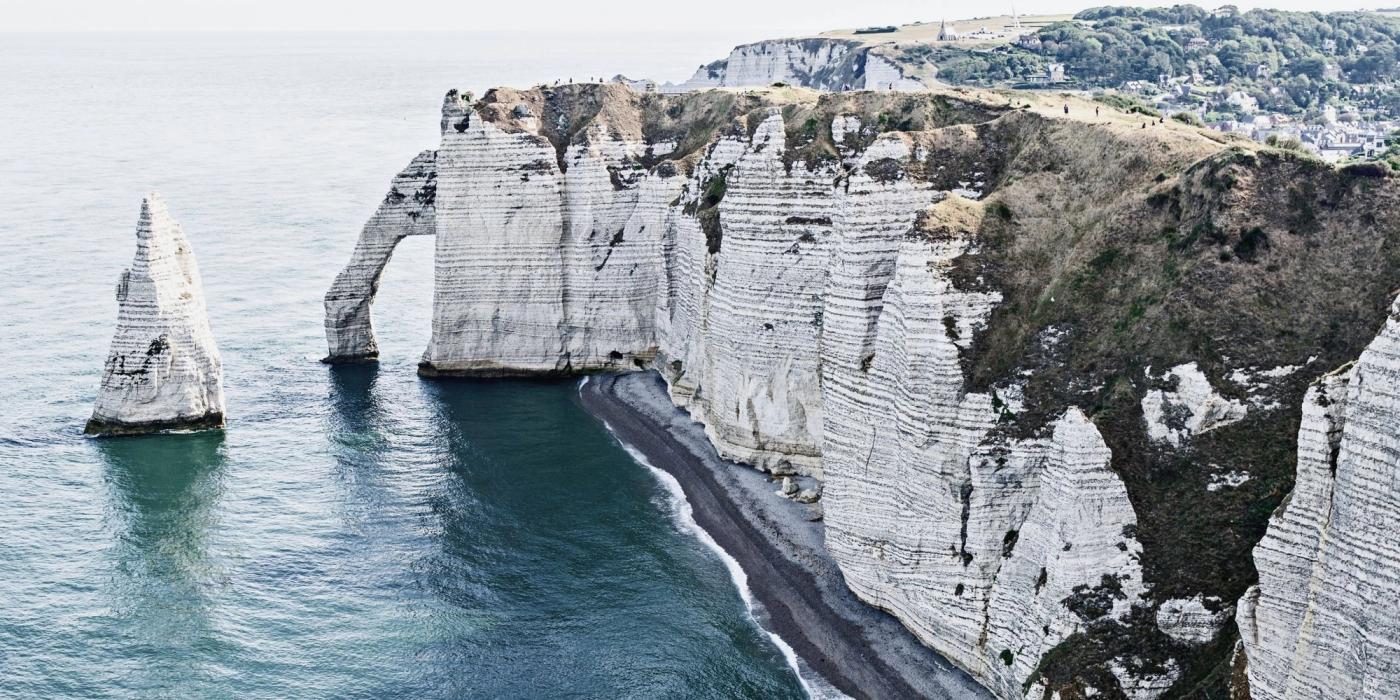
Seine-Maritime contains Rouen, the region’s administrative capital, where urban apartments and renovated hôtels particuliers (large historic townhouses) trade at €2,500 to €4,500/m² in prime locations. The Alabaster Coast, with Étretat and Fécamp, commands a coastal premium.
Calvados anchors the prestige end of the market. Deauville and Honfleur are the most internationally recognized addresses. A Belle Époque villa in Deauville can exceed €1.5 million, while Honfleur’s harbor-facing properties are structurally undersupplied relative to demand.
Manche, Eure, and Orne
Manche, home to Mont-Saint-Michel and the Cotentin Peninsula, offers the strongest value for coastal buyers. Rural properties here remain 20 to 35% cheaper than equivalent stock in Calvados, with comparable architectural character.
Eure and Orne are the regions’ interior departments, where longères (traditional single-storey Norman farmhouses) and manor houses with land consistently represent the best price-to-character ratio in mainland France.
Types of Normandy Properties for Sale
- Longères: Single-storey stone or brick farmhouses, often with attached outbuildings and agricultural land. Entry price: from €120,000 for renovation projects
- Manoirs: Multi-storey manor houses with formal gardens, typically dating from the 16th to 19th century
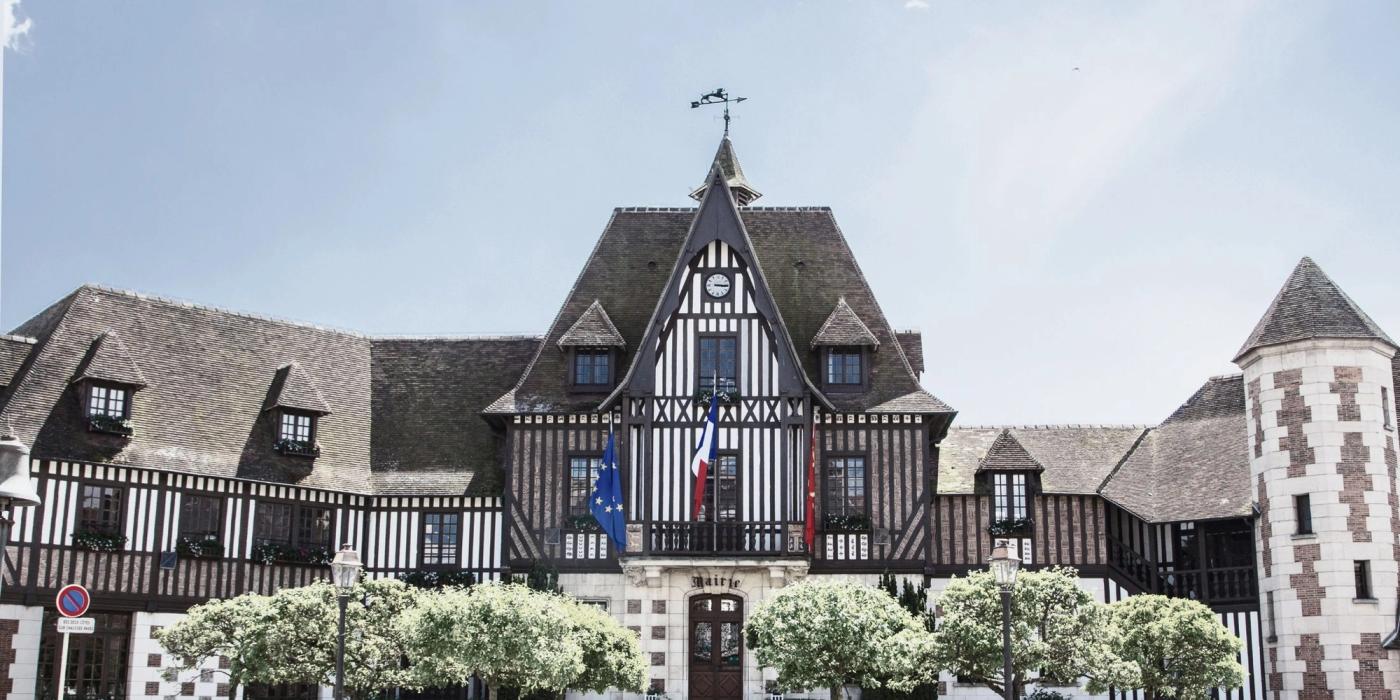
- Colombage houses: The half-timbered vernacular architecture of the Pays d’Auge, highly sought by buyers prioritizing authentic Norman aesthetic
- Seaside villas: Belle Époque and early 20th-century properties along the Côte Fleurie and Alabaster Coast
- Village townhouses: Urban fabric in market towns such as Lisieux, Bayeux, or Bernay
Normandy Real Estate Price Guide
The table below synthesizes verified transaction data from the DVF (Demande de Valeurs Foncières, the French government’s open database of actual property sale prices). These are realistic acquisition ranges, not asking prices.
| Region | Longère / Farmhouse | Countryside Manor | Coastal Home | Character Mansion |
|---|---|---|---|---|
| Seine-Maritime | €150,000 – €350,000 | €350,000 – €750,000 | €280,000 – €900,000 | €600,000 – €2,000,000 |
| Calvados | €180,000 – €420,000 | €400,000 – €950,000 | €350,000 – €1,500,000 | €800,000 – €3,500,000 |
| Manche | €100,000 – €280,000 | €280,000 – €600,000 | €220,000 – €750,000 | €450,000 – €1,500,000 |
| Eure | €130,000 – €300,000 | €300,000 – €650,000 | N/A | €400,000 – €1,200,000 |
| Orne | €90,000 – €250,000 | €250,000 – €550,000 | N/A | €350,000 – €1,000,000 |
Orne and Manche consistently offer the strongest entry positions for buyers with renovation capability or a long investment horizon.
Buying Property in Normandy: Step-by-Step Guide
The French conveyancing process is notary-led and typically takes three to four months from accepted offer to final deed. For a full procedural walkthrough tailored to international buyers, our guide on buying in France covers the complete legal and financial framework.
Key stages:
- Offer accepted and compromise de vente signed: The preliminary contract, which binds both parties and triggers a 10-day cooling-off period for the buyer
- Due diligence period: Environmental searches, urban planning certificates, and technical diagnostics are assembled and reviewed
- Financing formalized: Mortgage offers must be issued within the compromise period; non-resident financing requires specific broker expertise
- Acte authentique signed at the notary: Final deed transfer, at which point funds are cleared and keys exchanged
The total acquisition cost in France, including notary fees, registration taxes and agency commissions, typically adds 7 to 10% on top of the purchase price for existing properties. Our breakdown of property costs in France details every line item.
Normandy Real Estate vs. Other French Regions
| Factor | Normandy | Brittany | Île-de-France | Loire Valley |
|---|---|---|---|---|
| Average rural price/m² | €1,200 – €2,200 | €1,400 – €2,500 | €3,500 – €8,000+ | €1,500 – €2,800 |
| Paris connectivity | Excellent (< 2h) | Moderate (2.5 – 4h) | Direct | Moderate (1 – 2.5h) |
| Coastal access | Yes | Yes | No | No |
| Character property supply | Very high | High | Low | High |
| International buyer presence | Growing | Established | Very high | Moderate |
| Price appreciation trend | Stable to positive | Stable | Volatile | Stable |
A specific note for buyers drawn to southwestern French heritage: the Dordogne, and in particular the classified villages of the Périgord Noir such as La Roque-Gageac, Beynac-et-Cazenac, and Domme, represent a genuinely comparable market in terms of stone architecture and rural character. The Dordogne is architecturally warmer, the climate more favorable, and the international buyer base (particularly British and Dutch) deeply established. Buyers who are attracted to Normandy’s countryside typology, but open to southern exposure and a more Mediterranean light quality, should evaluate both markets simultaneously before committing.
Working With a Normandy Real Estate Advisor
The structural tension in the French property market is that the vast majority of agents are mandated by sellers, not buyers. Their legal and financial interest is to close a transaction at the highest possible price. This is not a criticism; it is simply the architecture of the market.
What Maison Arboris offers is the opposite mandate: we are retained exclusively by the buyer, we charge no commission from sellers, and our advisory fee is transparent and fixed from engagement. We conduct pre-offer due diligence on structural condition, planning history, environmental risk and price justification before any client capital is committed.
For buyers navigating Normandy real estate in 2026, the variables that matter are not the ones listed on any property portal. They are the drainage history of a longère’s foundations, the commune’s PLU (local urban planning document) restrictions, the actual transaction prices within 500 meters, and whether the seller’s timeline creates negotiation leverage. That intelligence is what we provide.
Frequently asked questions
01What is the average price per square meter for rural property in Normandy in 2026?
What is the average price per square meter for rural property in Normandy in 2026?
Rural Normandy property averages between €1,200 and €2,200 per square meter, depending on the department and condition. Orne and Manche offer the lowest entry points, while Calvados commands a premium, particularly in Deauville and Honfleur, where coastal demand remains consistently strong.
02Which Normandy department offers the best value for international property buyers?
Which Normandy department offers the best value for international property buyers?
Orne and Manche consistently offer the strongest value. Rural properties there run 20 to 35% cheaper than equivalent Calvados stock, with comparable architectural character. For buyers with renovation capability or a long investment horizon, these departments represent the most defensible entry positions in the region.
03How long does the property buying process take in Normandy, France?
How long does the property buying process take in Normandy, France?
The French conveyancing process typically takes three to four months from accepted offer to final deed. It begins with the compromise de vente, followed by due diligence, financing formalization, and concludes with the acte authentique signed before a notary. Total acquisition costs add 7 to 10% on top of the purchase price.
04Can non-residents and foreign nationals buy property in Normandy?
Can non-residents and foreign nationals buy property in Normandy?
Yes, France imposes no restrictions on foreign property ownership. Non-residents can purchase freely, though securing a French mortgage requires specialist non-resident broker expertise. Ownership is often structured through an SCI, a French civil real estate holding company that simplifies transmission and can offer tax and succession planning advantages.
05How does Normandy real estate compare to Brittany or the Loire Valley for buyers?
How does Normandy real estate compare to Brittany or the Loire Valley for buyers?
Normandy offers superior Paris connectivity, under two hours by TGV, at lower average prices than Brittany's established coastal market. Compared to the Loire Valley, Normandy adds direct coastal access. Its character property supply is very high, and international buyer presence is still growing, suggesting upside before the market fully matures.