Buying Property in the Luberon: The Ultimate Guide for International Buyers
26 April 2026 · Sarah & Sabine
The Luberon is not a brand. It is a territory, and like all territories of genuine value, it operates on its own terms, at its own pace, and with its own rules. For international buyers accustomed to transparent, digitised property markets, acquiring a home in this corner of Provence can feel simultaneously irresistible and opaque. The landscape is extraordinary. The stones are old. The prices are serious. And the market, when you look closely, rewards those who understand it and punishes those who don’t.
At Maison Arboris, we have accompanied buyers from the United States, the United Kingdom, and the Gulf through purchases across the Luberon. What follows is not a sales brochure. It is an honest, structured analysis of what the market looks like, what you should know before you sign anything, and how to position yourself as a serious buyer in one of France’s most competitive rural luxury markets.
Table of Contents
- Overview of the Luberon Real Estate Market
- The Most Beautiful Villages of the Luberon: A Focused Guide
- Types of Properties Available in the Luberon
- Property Types in the Luberon: At a Glance
- How to Choose the Right Property in the Luberon
- The Buying Process in the Luberon: Step by Step
- Buying in the Luberon vs. Other Provence Regions
- Financing Your Luberon Property Purchase
- Living in the Luberon: Lifestyle and Practical Information
- Why Work with a Specialist Buyer’s Advisor in the Luberon
Overview of the Luberon Real Estate Market
What Makes the Luberon a Unique Place to Buy Property
The Luberon is a massif and a regional natural park stretching across the Vaucluse and Alpes-de-Haute-Provence departments in southern France. It covers roughly 165,000 hectares, and the majority of its territory is protected under the Parc Naturel Régional du Luberon designation. This protection is precisely what makes it desirable, and precisely what makes it complex.
Construction is tightly controlled. New builds are rare. The supply of authentic stone properties is finite by definition. When buyers ask why Luberon prices have remained structurally elevated, the answer lies here: the combination of architectural heritage, landscape protection, and the international desirability of Provence has created a market where quality assets simply do not depreciate over the long term.
From a strategic patrimonial standpoint, the Luberon represents something specific: it is not a speculative market. It is a market of preservation and lifestyle, where values move slowly but in one direction. Between 2020 and 2025, quality properties in the premium villages recorded price increases of between 18% and 30%, driven largely by post-pandemic demand from northern European and American buyers seeking a tangible, liveable asset in a stable European jurisdiction.
Current Real Estate Trends and Price Ranges in the Luberon
As of 2026, the Luberon market is operating in two distinct tiers:
- Premium tier: Properties in the most coveted villages (Gordes, Bonnieux, Ménerbes, Lourmarin) with views, stone character, and pools. Price range: €650,000 to €5M+ depending on size and condition.
- Access tier: Properties in secondary communes, smaller villages, or those requiring significant renovation. Price range: €280,000 to €650,000, where patient buyers can find genuine value.
The average price per square metre across the Luberon zone varies considerably. In Gordes, you are looking at €5,000 to €8,500/m² for a renovated property. In Apt or the surrounding Calavon valley, the same indicator sits closer to €2,500 to €3,500/m². These are not abstract figures: they represent the real spread between a property you buy for lifestyle reasons and a property you buy because the market hasn’t caught up with it yet.
The Most Beautiful Villages of the Luberon: A Focused Guide
This section deserves particular attention, because the Luberon is not one market. It is a collection of micro-markets, each village with its own character, its own buyer profile, and its own price dynamics. Understanding these differences is not optional. It is the foundation of any serious purchasing decision.
Gordes
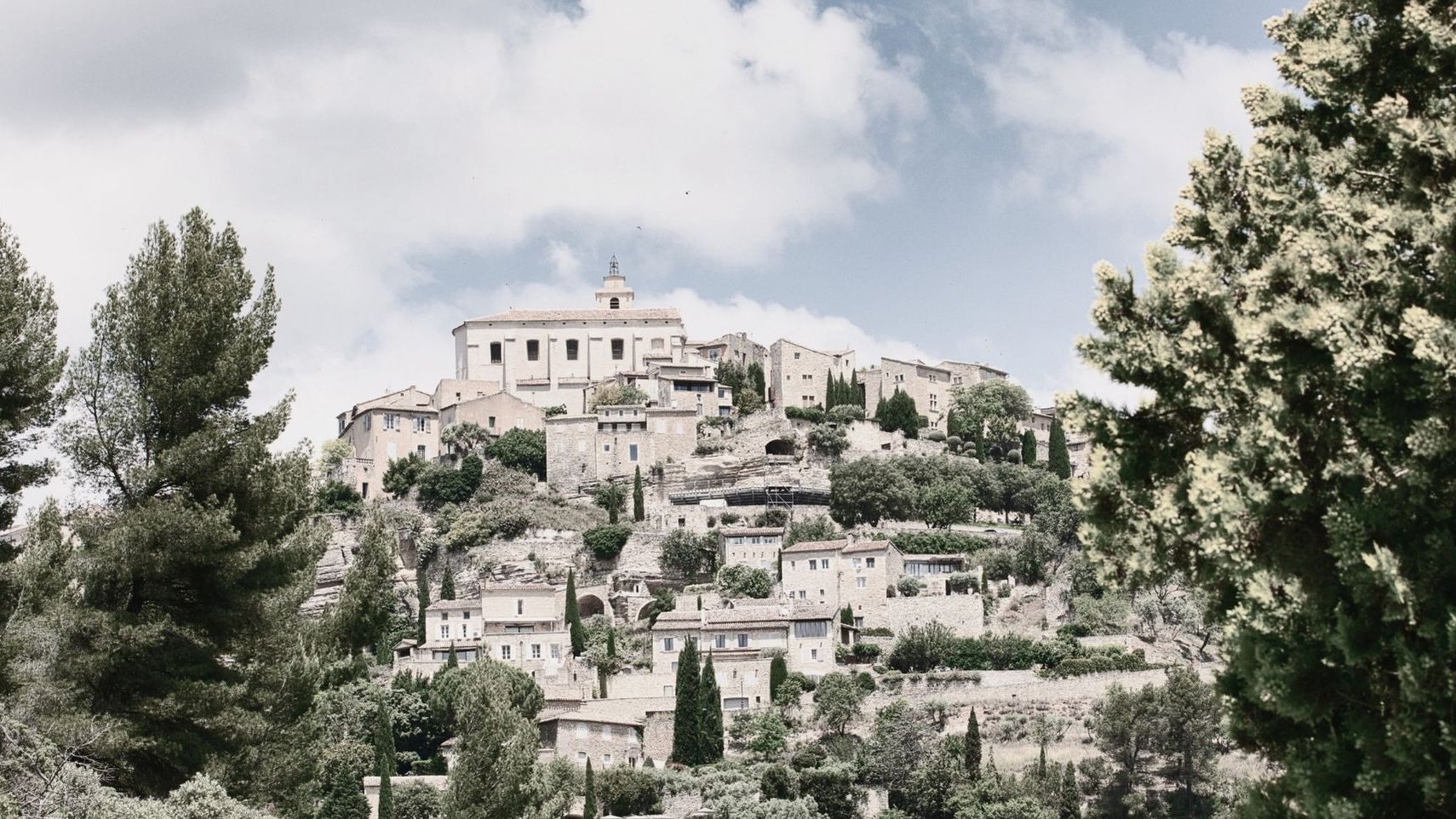
Gordes is the Luberon’s most photographed village, and for good reason. Perched on a cliff face overlooking the Senanque valley, with its Cistercian abbey visible from the plateau, it commands the highest prices in the area and attracts a genuinely international clientele. Property here is almost entirely composed of stone bastides and village houses, with limited supply and steady demand.
The buyer profile in Gordes tends toward ultra-high-net-worth international buyers, with a significant American and Northern European presence. Properties rarely stay on the open market for long. Many of the most interesting transactions happen off-market, through networks rather than listings.
Bonnieux
Bonnieux occupies a natural terrace on the north slope of the Petit Luberon, with panoramic views across the Calavon plain toward the Vaucluse Plateau. It is, in our analysis, one of the most architecturally coherent villages in Provence: the old cedar forest, the 12th-century church, the remarkably preserved stone facades. Bonnieux attracts a more discreet buyer, typically European (Belgian, Swiss, British), and the market here is quieter but no less expensive for prime assets.
Lourmarin
Lourmarin differs from the plateau villages in one fundamental way: it is a genuine year-round community. The village has a working economy, excellent restaurants, a weekly market, and enough permanent residents to give it authentic daily life. Albert Camus is buried here. The château is one of the finest examples of Renaissance architecture in Provence.
For buyers considering primary or semi-primary residence rather than pure holiday use, Lourmarin represents one of the most rational choices in the Luberon. Prices are strong but not speculative, and the infrastructure justifies them.
Roussillon
Roussillon is built on and from ochre. The village’s architecture is literally made of the red and orange earth beneath it, and the Sentier des Ocres, a protected trail through old quarries, is one of the most visually striking landscapes in France. The buyer demographic here tends toward those who prioritise aesthetic singularity. Properties are genuinely distinctive, and renovation projects can yield exceptional results.
L’Isle-sur-la-Sorgue
L’Isle-sur-la-Sorgue is the practical heart of the Luberon zone, a flat, riverside town crossed by multiple arms of the Sorgue river and internationally known for its antique market. For buyers seeking convenience alongside character, proximity to Avignon TGV (40 minutes by car), and a more urban texture within the Luberon envelope, L’Isle-sur-la-Sorgue is a rational choice. It is also one of the more accessible entry points in terms of price.
Ménerbes
Ménerbes is a long, narrow village stretched along a ridge above the valley. It was made internationally famous by Peter Mayle’s A Year in Provence, which created lasting demand from Anglophone buyers. Despite the literary mythology, the market here is serious: very limited supply, strong prices, and an almost entirely renovated stock of properties. Finding a quality property here requires patience and a strong local network.
Lacoste
Lacoste sits opposite Bonnieux, slightly smaller and historically associated with the Marquis de Sade whose château still dominates the skyline. The village has experienced significant investment from fashion designer Pierre Cardin (now managed by his estate), which funded extensive restoration. Lacoste attracts buyers who value a certain refined obscurity: less known than Gordes or Ménerbes, but architecturally compelling and with real upside potential.
Apt and Surroundings
Apt is the administrative centre of the Luberon, a working Provençal market town rather than a picture-postcard village. Its Saturday market is one of the best in the region. For buyers who want access to the Luberon landscape while maintaining proximity to services, schools, and a functioning town, the Apt basin and its surrounding hamlets (Saignon, Sivergues, Saint-Saturnin-lès-Apt) represent some of the best value per square metre in the entire zone, with serious renovation opportunities available.
Types of Properties Available in the Luberon
Traditional Farmhouses (Mas) and Bastides
The mas is the iconic Provençal farmhouse: a long, low stone building, typically L or U-shaped, with thick walls, small windows on the north face, and a south-facing orientation. A bastide is its more noble cousin, often larger and with more formal architectural detail. Both are found throughout the Luberon, and both represent the highest desirability in the market.
A restored mas with pool, land, and views can command between €800,000 and €3M+ depending on the commune and condition. Unrestored or partially restored examples with genuine bones represent the best value play in the current market.
Stone Village Houses and Character Properties
Village houses in the Luberon are typically narrow, multi-storey, and share party walls with neighbours. They range from modest workers’ cottages to genuinely grand maisons de maître with private courtyards. Entry price for a habitable village house in a secondary commune starts around €250,000 to €350,000. In Gordes or Bonnieux, a well-positioned village house starts at €500,000 and rises quickly.
Luxury Villas with Pool and Garden
The luxury villa category in the Luberon tends to encompass either fully restored mas reprogrammed as contemporary-comfortable residences, or purpose-built Provençal-style constructions. Most serious buyers in this category are looking for a minimum of 4 bedrooms, a heated pool, a caretaker’s cottage, and between 5,000 and 30,000m² of land. Budget: €1.5M to €5M+.
Contemporary Houses and Modern Properties
Modern construction is rare in the Luberon given planning restrictions, but it does exist, particularly in the lower slopes of the Durance valley and in secondary communes. Contemporary builds appeal to buyers who prioritise energy efficiency, low maintenance, and modern amenity without sacrificing proximity to the landscape.
Rural Properties and Estates with Land
At the upper end of the market, large agricultural estates, domaines with vineyards, truffière parcels, and properties exceeding 5 hectares represent a distinct sub-category. These are not purely residential acquisitions: they sit at the intersection of lifestyle and agricultural investment, and they require a specific due diligence approach.
Property Types in the Luberon: At a Glance
| Property Type | Typical Size | Price Range (2026) | Renovation Need | Best For |
|---|---|---|---|---|
| Mas / Bastide | 200–600m², 1–5 ha land | €800k – €3M+ | Low to High | Full lifestyle buyers, rental investment |
| Stone Village House | 80–250m² | €250k – €1.2M | Low to Medium | Year-round residents, holiday base |
| Luxury Villa with Pool | 250–600m², garden | €1.5M – €5M+ | Low | Turnkey lifestyle buyers |
| Contemporary House | 120–300m² | €350k – €1.2M | Very Low | Low-maintenance buyers, families |
| Estate / Domaine | 500m²+, 5–50 ha | €2M – €10M+ | Variable | Patrimonial investors, agricultural use |
How to Choose the Right Property in the Luberon
Define Your Budget and Hidden Costs of Buying in France
The purchase price is never the total cost. In France, acquiring a property involves notaire fees of approximately 7% to 8% of the purchase price for older properties (the standard case in the Luberon). This covers transfer taxes, land registry fees, and the notaire’s own remuneration. On a €1M purchase, that is €70,000 to €80,000 in acquisition costs before any renovation, furnishing, or agency fees. For a detailed breakdown of what these costs encompass, our guide on the cost of buying in France provides a full line-by-line analysis.
Agency fees in France are typically between 3% and 6% and are either paid by the seller (honoraires vendeur) or included in the displayed price (HAI). It is essential to clarify this structure before any offer.
Identify Your Priorities: Village Life vs. Countryside Retreat
This is not a stylistic question. It is a functional one. A village house in Ménerbes with no car dependency is a fundamentally different asset to an isolated mas 8km from the nearest boulangerie. Both have markets. Both have value. But they require different maintenance regimes, different rental strategies, and different governance of daily life.
Seasonal Considerations: Year-Round Living vs. Holiday Home
The Luberon is extremely seasonal. July and August represent peak occupation, tourism, and rental yield. From November to March, certain villages are almost empty, restaurants are closed, and services are reduced. If you are planning to use the property for fewer than 12 weeks per year, the economics of an isolated property are different from those of a village property where summer rental income can be substantial.
Evaluating Property Condition and Renovation Potential
Renovation in a protected zone requires understanding the ABF, the Architectes des Bâtiments de France, the regulatory body that controls exterior modifications in classified areas. Their approval is mandatory for any visible work. This adds time and cost to renovation projects, but also provides a guarantee of architectural coherence that protects asset value over the long term.
Understanding Land, Pool, and Outbuilding Regulations in the Luberon
Within the Parc Naturel Régional du Luberon, building a new pool, extending a building, or adding outbuildings requires a permis de construire or déclaration préalable and must conform to the Charte du Parc, the park’s planning charter. These are not insurmountable constraints, but they must be researched at the parcel level before any offer is made.
The Buying Process in the Luberon: Step by Step
Step 1: Finding the Right Property and Working with a Local Agency
The Luberon market is covered by a combination of national networks (Sotheby’s, Barnes, Knight Frank), local independent agencies, and notaires who sometimes act as informal brokers. A significant proportion of premium transactions, particularly above €1.5M, occur off-market.
Step 2: Making an Offer and Signing the Compromis de Vente
Once a property is identified, a written offer is submitted. Upon agreement, both parties sign a compromis de vente, a preliminary contract that commits both buyer and seller. The buyer pays a deposit of 10% of the purchase price at this stage, held in escrow by the notaire.
Step 3: The Role of the Notaire in French Property Transactions
The notaire is a state-appointed legal officer, not an adversarial lawyer in the Anglo-Saxon sense. They represent the state’s interest in the transaction, not the buyer’s. The notaire verifies title, compiles mandatory diagnostics, checks planning status, and registers the transaction. Crucially, a buyer is entitled to appoint their own notaire (in addition to the seller’s) at no additional cost to the buyer. This is something we systematically recommend to our clients.
Step 4: Due Diligence, Surveys, and Mandatory Diagnostics
French law requires a dossier de diagnostics techniques (DDT) covering:
- Energy performance (DPE, note that properties rated F or G face increasing regulatory restrictions)
- Asbestos and lead presence
- Termite and parasite inspection
- Electrical and gas installations
- Natural and technological risk exposure
- Measurement (Loi Carrez for co-owned properties)
Beyond these mandatory elements, we always recommend an independent structural survey, particularly for stone properties and mas. The mandatory diagnostics tell you what the law requires to be disclosed. They do not tell you what the walls are hiding.
Step 5: Signing the Acte de Vente and Getting the Keys
The acte de vente is the final deed, signed before the notaire, usually 2 to 3 months after the compromis. At this point, the balance of the purchase price is transferred, fees are paid, and keys are handed over. The deed is registered at the land registry (cadastre), and the buyer receives a copy within a few weeks.
How Long Does the Buying Process Take in the Luberon?
From accepted offer to keys: typically 10 to 14 weeks for a straightforward transaction. Complex cases involving mortgage financing, co-ownership issues, or estate situations can extend to 5 to 6 months. For non-resident buyers arranging finance in France, factor in an additional 4 to 8 weeks for mortgage approval.
Buying in the Luberon vs. Other Provence Regions
| Criteria | Luberon | Alpilles | Var (interior) | Gorges du Verdon |
|---|---|---|---|---|
| Price per m² (avg. prime) | €4,000 – €8,500 | €4,500 – €9,000 | €2,500 – €5,000 | €1,800 – €3,500 |
| Lifestyle character | Perched villages, lavender, ochre | Olive groves, Les Baux, art | Wild, forested, Mediterranean | Dramatic gorges, altitude |
| Accessibility | TGV Avignon 45min, Marseille airport 1hr | TGV Avignon 30min | Toulon/Marseille airports | Limited public transport |
| Rental yield (holiday) | 3.5% – 6% | 3% – 5.5% | 3% – 5% | 2.5% – 4% |
| International buyer profile | US, UK, Belgian, Gulf | French, Belgian, Dutch | British, Scandinavian | French, German |
| Off-market availability | High | Medium | High | Low |
| Planning restrictions | Very high (Parc Naturel) | High (Les Baux zone) | Medium | High (protected gorge) |
The Luberon holds its position primarily because of its combination of accessibility and aesthetic coherence. Saint-Rémy-de-Provence and the Alpilles can compete on price and prestige, but the village density and panoramic landscapes of the Luberon remain unmatched.
Financing Your Luberon Property Purchase
Mortgage Options for French and Foreign Buyers
French banks do lend to non-residents, including buyers from the United States, the United Kingdom, and Gulf Cooperation Council countries. The conditions are more demanding than for residents: typically a minimum 30% deposit, documented income and assets, and a formal proof of stable revenue. Interest rates in France in 2026 are operating in the 3.2% to 4.1% range for 20-year fixed mortgages, having stabilised from the peak of 2023 to 2024. For a full analysis of non-resident financing options, our article on buying as non-resident provides current benchmarks and lender comparisons.
For buyers from the Gulf, one important consideration is the Sharia-compliant financing question. French banks do not offer Islamic mortgages. Gulf buyers purchasing significant assets in the Luberon typically do so either in cash or through international private banking structures.
Tax Implications and Notaire Fees Explained
Beyond the notaire fees already noted, buyers should be aware of:
- Taxe foncière: Annual property tax paid by the owner. Varies by commune but typically €1,500 to €5,000 per year for a mas.
- Taxe d’habitation: Now abolished for primary residences but still applicable in some cases for secondary residences owned by higher-income households.
- Capital gains tax (plus-value): If you sell the property within 22 years of purchase, a capital gains tax applies. The rate diminishes progressively from year 6 onwards. After 22 years, full exemption. For social levies, full exemption is reached at 30 years. Non-EU residents face additional withholding mechanisms.
Rental Yield and Investment Return in the Luberon
A well-positioned mas in the Luberon with 4 bedrooms and a pool can generate €4,000 to €9,000 per week in peak season. With 8 to 12 weeks of occupancy, gross seasonal rental income of €40,000 to €80,000 is achievable on a property valued between €1M and €2.5M. After management fees (typically 20% to 25%), maintenance, and tax, net yield sits in the 3.5% to 5% range, competitive with other French lifestyle markets.
Unique Investment Opportunities in the Luberon
The most interesting investment angle in the Luberon right now, from a structural market perspective, is the renovation opportunity in the secondary villages, Lacoste, Saignon, Sivergues, Viens, and the Apt basin. These areas are undervalued relative to their landscape quality and their proximity to premium villages. Buyers with renovation budgets and patience are acquiring assets here at prices that will look conservative within a decade.
Living in the Luberon: Lifestyle and Practical Information
Local Villages, Markets, and Day-to-Day Life
The rhythm of daily life in the Luberon is organised around the market calendar. Each village hosts a weekly market:
- Apt: Saturday (the largest and most complete)
- L’Isle-sur-la-Sorgue: Sunday (also famous for antiques)
- Lourmarin: Friday
- Bonnieux: Friday (smaller, but excellent produce)
- Coustellet: Sunday morning farmers’ market, considered one of the best in Provence
Beyond markets, the Luberon has a functioning network of artisans, architects, notaires, and service providers oriented toward both permanent residents and second-home owners.
Schools, Healthcare, and Essential Services
For families considering primary residence:
- International schools are available in Aix-en-Marseille (approximately 60 to 90 minutes from most Luberon villages)
- The public school network (maternelle through lycée) functions normally in the larger towns, Apt, Pertuis, Cavaillon
- The main hospital is in Apt and Pertuis; Aix-en-Provence offers specialist care
- Most villages have a pharmacy, a general practitioner, and basic commerce
Accessibility: Airports, Motorways, and Transport Links
- Marseille Provence Airport: 60 to 90 minutes from most Luberon villages. Direct flights to London, Paris, Amsterdam, Dubai, and beyond
- Avignon TGV station: 40 to 60 minutes. Paris in 2h40 by TGV
- Nîmes-Garons Airport: An underused alternative used by some charter and low-cost operators
- Motorway access: The A7 (the historic Route Nationale 7) connects the Luberon corridor northward and southward efficiently
Climate and the Best Time of Year to Visit Before Buying
The Luberon has one of the most reliable Mediterranean climates in France: 300 days of sunshine per year, low rainfall concentrated in autumn and spring, dry summers, and mild winters. For buyers, the strategic advice is clear: visit in the off-season (November, February, or March) as well as in summer. A property that feels magical in July can reveal structural issues, neighbourhood noise, or access problems that only appear in wet or cold conditions. A genuine advisory process requires seeing the asset under different conditions.
Why Work with a Specialist Buyer’s Advisor in the Luberon
The Advantages of a Specialist Buyer’s Advisor
A local agency represents sellers. Their fiduciary obligation, legally and commercially, is to maximise the sale price for their client. A property hunter or buyer’s advisor represents the opposite interest: to identify the right asset, negotiate the best price, and protect the buyer’s position throughout the transaction.
In the Luberon specifically, the advantages of independent advisory are:
- Access to off-market and pre-market listings through local agent networks built over years
- Ability to conduct critical due diligence on planning history, past disputes, and structural issues before an offer is made
- Negotiation expertise calibrated to the specific sub-market dynamics of each village
- Coordination of the legal, technical, and financial aspects of the transaction under a single mandate
Our Network and Off-Market Properties in the Luberon
At Maison Arboris, we have structured relationships with notaires, local agencies, and private owners across the Luberon. A significant portion of the mandates we work on never appear on Rightmove, SeLoger, or any public portal. They circulate through professional networks, and accessing them requires presence and trust built over years, not weeks.
Our Approach: Sarah and Sabine at Maison Arboris
Sarah focuses on the financial architecture of each acquisition: structuring the offer, coordinating mortgage brokers and private bankers, and modelling the fiscal impact of each acquisition structure. Whether a buyer is acquiring in personal name, through an SCI (a French property holding company, equivalent to a family real estate LLC in US terms), or through a holding structure, the choice has meaningful tax consequences over a 10 to 20 year horizon.
Sabine focuses on market intelligence and long-term patrimonial positioning. Each village in the Luberon has a specific demand profile, a specific liquidity profile, and a specific price trajectory. The decision to buy in Gordes versus Lacoste versus Saignon is not purely emotional. It is a financial decision with a 10-year and 20-year consequence. That decision deserves data, not enthusiasm.
Together, our approach is built on one principle: we never recommend what we would not buy ourselves, at the price we negotiate, under the conditions we secure.
The Luberon is a market that rewards patience, local knowledge, and rigorous preparation. The properties are extraordinary. The regulatory environment is demanding. The prices at the premium end are serious and justified. For buyers who approach this territory with the right advisory framework, it offers something increasingly rare in French real estate: genuine lifestyle value combined with structural price resilience.
If you are considering acquiring a property in the Luberon, whether as a primary residence, a holiday home, or a long-term patrimonial investment, we are available for an initial confidential advisory call to discuss your project in detail.
Frequently asked questions
01Is the Luberon expensive compared to other Provence regions?
Is the Luberon expensive compared to other Provence regions?
Yes, the Luberon is one of Provence's priciest rural markets. In Gordes, expect €5,000–€8,500/m² for renovated properties. Secondary villages like Apt or Lacoste offer better value at €2,500–€3,500/m². Planning restrictions and finite stone-property supply keep prices structurally elevated long-term.
02Is it difficult for an American to buy property in France?
Is it difficult for an American to buy property in France?
Americans can legally buy property in France without restriction. The process requires a French notaire, a French bank account, and typically a 30% minimum deposit if financing locally. The legal framework differs significantly from the US, so working with a bilingual buyer's advisor is strongly recommended to avoid costly missteps.
03What is the most beautiful village in the Luberon?
What is the most beautiful village in the Luberon?
Gordes is the most iconic, perched dramatically above the Sénanque valley. Bonnieux is considered architecturally the most coherent. Roussillon is unmatched for visual singularity with its ochre cliffs. Beauty depends on your priorities: each village has a distinct character, buyer profile, and price dynamic worth understanding before choosing.
04What hidden costs should buyers budget for beyond the property price in the Luberon?
What hidden costs should buyers budget for beyond the property price in the Luberon?
Budget an additional 7–8% for notaire fees on older properties, covering transfer taxes and registration. Agency fees range from 3–6%. Annual taxe foncière typically runs €1,500–€5,000 for a mas. Independent structural surveys are also strongly recommended, especially for historic stone properties, adding €1,000–€3,000.
05Can you generate rental income from a Luberon property?
Can you generate rental income from a Luberon property?
Yes. A well-positioned 4-bedroom mas with a pool can earn €4,000–€9,000 per week in peak season. With 8–12 weeks of occupancy, gross seasonal income of €40,000–€80,000 is realistic. After management fees of 20–25% and maintenance costs, net yields typically range between 3.5% and 5% annually.